A dental emergency can be alarming — pain, bleeding, or a broken tooth often feel more urgent than they are, but acting quickly and calmly makes a real difference. First, assess the situation: if there is heavy bleeding or signs of a head injury, seek medical attention right away. For most oral emergencies, stopping any bleeding with gentle pressure, rinsing the mouth with warm water, and applying a cold compress to reduce swelling are effective first measures while you arrange care.
If a tooth has been knocked out, preserve it by handling only the crown (the chewing surface), gently rinsing off debris with water, and keeping it moist. Ideally, place the tooth back into its socket if possible, or store it in a container of milk or saline. For broken or fractured teeth, gather any fragments and protect the lip or cheek from sharp edges with gauze or dental wax until you can be seen.
Managing pain and infection risk at home is about sensible, temporary measures: over-the-counter pain relievers and cold packs can reduce discomfort, but avoid placing aspirin directly on a tooth or gum — that can irritate soft tissue. If swelling or fever develops, or if pain rapidly worsens, prioritize prompt professional evaluation to prevent complications that could affect oral and overall health.
Dental “emergencies” cover a broad range of issues, from persistent toothaches to acute trauma. Some problems develop suddenly, while others become urgent because an infection or damage to the tooth was left untreated. Identifying the type of problem early helps the dental team triage effectively and determines whether immediate stabilization or a same-day procedure is needed.
Typical urgent conditions include severe toothaches that indicate decay reaching the nerve, chipped or fractured teeth that expose sensitive inner layers, and dental abscesses that cause swelling and systemic symptoms. Oral soft-tissue problems — such as uncontrolled bleeding, painful ulcers, or lacerations to the lips and cheeks — also require swift attention to control bleeding and reduce infection risk.
Other situations we frequently treat are dislodged or lost restorations (crowns and fillings), problems with dentures, troublesome wisdom teeth that become infected or impacted, and loose or broken teeth resulting from injury or advanced decay. Recognizing the signs that a condition cannot wait — worsening pain, swelling, fever, or spreading redness — helps patients seek care before the issue escalates.
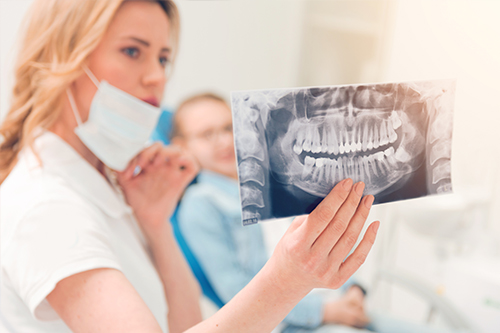
When you arrive for emergency care, the clinical team follows a clear process to prioritize safety and comfort. Triage focuses on controlling pain and infection risk: we assess airway and bleeding first, then perform a targeted oral exam to determine the source of pain or injury. Digital X-rays or CBCT imaging may be used when needed to view fractures, infections, or root problems that are not visible on the surface.
Stabilization can include temporarily smoothing sharp tooth edges, placing protective dressings, or adjusting a prosthesis that is causing trauma. For painful infections, short-term measures may involve drainage of an abscess when indicated and prescribing antimicrobial therapy in cases where systemic signs — such as fever or facial swelling — suggest the infection is spreading. Local anesthesia is used to make diagnostic and initial treatment steps comfortable.
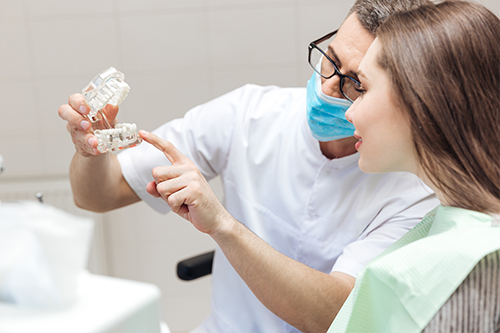
Once immediate concerns are addressed, the team outlines next steps to restore function and long-term health. Some emergencies are resolved with definitive care the same day, while others require staged treatment — for example, stabilizing an injured tooth now and scheduling a restorative procedure after tissues have healed. Clear communication about options and timelines helps patients make informed decisions about their care.
Treatment depends on the nature and extent of the damage. Minor fractures and lost fillings are often repaired quickly with dental bonding or a new restoration to restore form and comfort. More extensive structural damage may require a crown to rebuild the tooth and protect the remaining root. When the dental pulp (nerve) is involved, root canal therapy is a common, tooth-preserving option that can relieve pain and eliminate infection while keeping the natural tooth in place.
In cases where a tooth cannot be saved, extraction may be the safest path to protect surrounding structures. Modern extraction techniques prioritize patient comfort and healing. Following removal, patients can explore replacement options to restore chewing function, speech, and appearance. Dental implants, fixed bridges, and removable prostheses are established approaches to replace missing teeth; implants are considered the most lifelike long-term solution in many situations.
Howard County Family Dentistry offers a full spectrum of emergency and restorative services designed to transition patients from urgent care to lasting solutions. Our approach balances immediate relief with thoughtful planning for functional and aesthetic outcomes, ensuring that each treatment plan reflects the patient’s needs and oral health goals.
While not every emergency is preventable, many complications can be reduced through sensible habits and planning. Regular dental checkups and prompt treatment of small problems make major emergencies less likely. For athletes and individuals at higher risk of dental trauma, custom-fitted mouthguards provide effective protection. Keeping routine dental appliances well maintained also decreases the chance of sudden failures.
It helps to have a simple at-home emergency kit: sterile gauze, a small container with a lid (for storing tooth fragments or an avulsed tooth), and a list of basic first-aid steps. Knowing when to seek urgent dental care — persistent pain, swelling that affects breathing or swallowing, or a tooth that has been completely displaced — empowers patients to act quickly and avoid avoidable complications.
Follow-up care after an emergency is just as important as the initial visit. Timely restorative treatment, monitoring for signs of infection, and clear aftercare instructions support long-term recovery. If you experience unusual symptoms after emergency treatment, contact your dental office promptly rather than waiting for a scheduled appointment.
In summary, dental emergencies require a calm, decisive response and access to knowledgeable care. Our office is equipped to evaluate urgent oral health problems, provide immediate relief, and plan appropriate restorative treatment. For more information or to discuss how we handle emergency situations, please contact us to learn how we can help you or a family member.

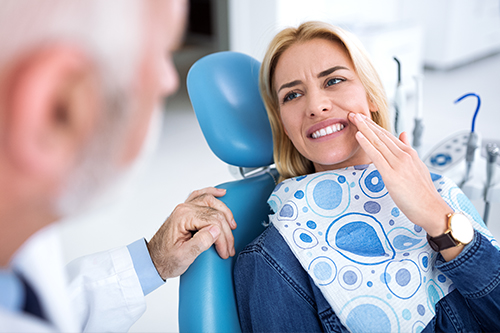
Pain is your body's way of signaling that something is not quite right and though there are many reasons for oral pain, one of the most common complaints and reasons for seeking urgent dental care is a toothache. Whether you simply need a dental filling, a crown, or require a root canal procedure to save your tooth, we'll alleviate your discomfort and restore the look and function of the involved tooth.

Dental trauma can result in a defect as minor as a small chip in tooth enamel to a more extensive and painful crack or fracture. With sufficient force, a tooth can even be displaced or completely knocked out of its socket. With prompt emergency care, many injured teeth can be restored and saved.

The last teeth in your mouth to develop, wisdom teeth often do not have enough room to fully erupt or may be positioned in the wrong direction. These issues can affect your dental health as well as overall well-being. Our office provides skilled care to address the complications caused by problematic wisdom teeth.

A broken or lost dental prosthesis or restoration can cause embarrassing gaps in your smile as well as compromise your ability to eat and speak with ease. If you've lost or broken a dental filling, denture, crown, or other dental appliance, you can rely on our office to perform a prompt repair or provide a durable and cosmetically pleasing replacement as quickly as possible.
At the office of Howard County Family Dentistry, emergency appointments are always available. Of course, in addition to providing top treatment for dental emergencies, we also welcome patients searching for high quality and affordable care. We offer a complete range of the latest and best cosmetic and dental services for every member of your family.
If you are suffering from a toothache or have sustained a dental injury, it is important to visit the dentist as soon as possible before more serious complications arise. Whether your dental emergency is painful, if it affects the appearance of your smile, or if you suspect that an infection is present, our office will make every effort to see you as promptly as possible for care.
At the office of Howard County Family Dentistry, we treat your dental emergency as our top priority. Our caring team will respond to your emergency call right away, making sure you get the gentle, state-of-the-art care you need without delay.
As your trusted emergency dentist in Glenwood, we provide the highest quality of care to mitigate the stress, anxiety, and discomfort of dental problems. Our dedicated team will help you start feeling better as soon as we receive your emergency call.
At the office of Howard County Family Dentistry, we provide skilled and experienced care to effectively resolve a broad range of dental emergencies, restoring a patient's oral health while protecting their overall wellbeing.
However, even so, specific dental emergencies pose significant threats to one's health. These situations require immediate, emergency room care. Serious and potentially life-threatening dental emergencies include significant oral and facial trauma such as jaw fractures, deep wounds or lacerations to the face and mouth, an abscess or infection that causes widespread facial or submandibular swelling, or affects breathing and swallowing.
At the office of Howard County Family Dentistry, we provide prompt, skilled, and experienced care to address dental emergencies. We understand that finances are always a concern and do our best to provide options in care that are both affordable and respect your budget.
Once we've had the opportunity to examine your smile, we can give you a clear picture of any existing dental issues, along with a quote for what the cost of treatment will be. The cost of care all depends upon the extent and complexity of issues affecting the health or appearance of your smile and the types of procedures that are required.
To help alleviate any additional stress or delay, you can count on our staff to work with you to optimize coverage for your dental care and to minimize your out-of-pocket expenses. For patients without insurance, we strive to make things easier as well! We invite you to visit our financial information page or speak to an expert in our business office.
Dental emergencies are often painful and debilitating experiences. For this reason it's important to have an emergency dentist in Glenwood, who welcomes patients with urgent dental needs while providing the prompt care required to restore oral health.
Here are just some of the reasons why so many patients choose our office for emergency dental care and to meet their family's dental needs:
We're dedicated to helping patients enjoy good oral health and beautiful smiles. We look forward to helping you keep your smile in tip-top condition. You can rest assured that our highly skilled office team will provide you the highest quality of state-of-the-art dental care and have you smiling again in no time!
To make an appointment or for more information on our office and the many state-of-the-art services we provide, give us a call today.
Remain as calm as possible and quickly assess the situation for serious threats such as heavy bleeding, loss of consciousness, or signs of a head injury. If any of those signs are present, seek emergency medical attention immediately before addressing the dental problem. For most dental injuries, control bleeding with gentle pressure using sterile gauze, rinse the mouth with warm water to remove debris, and apply a cold compress to the outside of the face to reduce swelling.
Keep the injured person still and avoid giving food or drink if there is a risk of facial trauma or concussion. Protect sharp tooth fragments with gauze or dental wax to prevent lip or cheek lacerations until you can be seen. Arrange prompt evaluation with your dental team to determine whether immediate stabilization or same-day treatment is needed.
When a permanent tooth is completely knocked out (avulsed), quick, careful action can greatly increase the chance of saving it. Pick up the tooth by the crown only, avoid touching the root, rinse gently with water if soiled, and if possible reinsert it into the socket making sure it faces the right way; hold it in place with light pressure or bite on gauze. If reinsertion is not possible, keep the tooth moist by placing it in milk, saline, or the patient’s saliva and get to a dentist immediately, as minutes matter for successful reimplantation.
Avoid scrubbing the root or using disinfectants, and do not wrap the tooth in tissue as this can dry it out. For children with mixed dentition, a knocked-out baby tooth should not be replanted; instead, contact a dentist for guidance. Prompt dental evaluation will determine whether splinting, root canal therapy, or further restorative work is required to preserve function and appearance.
Not all toothaches require emergency care, but certain symptoms indicate a potentially serious problem that should be evaluated promptly. Seek urgent attention if you experience severe, worsening pain that interferes with sleep or daily activities, visible swelling of the face or gums, fever, or difficulty breathing or swallowing. These signs can suggest a spreading infection or abscess that may need immediate drainage, antibiotics, and definitive dental treatment.
Milder or intermittent aches can often wait for a scheduled appointment, but persistent pain should not be ignored because infections and deep decay can progress quickly. In the meantime, manage discomfort with over-the-counter analgesics as directed and avoid placing aspirin directly on the gum or tooth, which can irritate soft tissues. Timely evaluation helps prevent complications and preserves teeth whenever possible.
If a crown or filling becomes dislodged, save any fragments and protect the exposed tooth surface to reduce sensitivity and the risk of infection. You can temporarily cover sharp edges with dental wax or clean gauze, and a small dab of over-the-counter dental cement may provide short-term protection until you see a dentist. Avoid chewing on the affected side, and keep the area clean by rinsing gently with warm water.
Contact your dental office as soon as possible to arrange repair or replacement, since exposed tooth structure is vulnerable to further damage and decay. The dentist will evaluate whether the existing restoration can be re-cemented or if a new crown, onlay, or filling is required. Prompt restorative care restores function and helps prevent the need for more extensive treatment later.
Dental infections and abscesses often cause localized swelling, pain, and systemic symptoms such as fever; these cases require prompt professional evaluation to control the infection and prevent spread. Emergency management typically begins with a focused exam and imaging to locate the source, followed by drainage of the abscess when indicated and prescription of appropriate antibiotics if there is evidence of systemic involvement. Pain is controlled with local anesthesia for procedures and with recommended analgesics as needed.
Definitive treatment may include root canal therapy to remove infected tissue, extraction of a nonrestorable tooth, or repair of a contributing restorative problem. Follow-up care is important to confirm resolution, monitor healing, and complete restorative procedures that restore long-term oral health and function. If you notice rapidly increasing swelling, difficulty breathing, or spreading redness, seek urgent care immediately.
Emergency care can often stabilize fractured or cracked teeth and reduce the risk of further damage or infection. Initial steps include smoothing sharp edges, placing a protective temporary restoration or dressing, and using local anesthesia to assess the extent of the injury comfortably. Diagnostic imaging helps determine whether the fracture extends into the root or pulp and whether immediate root canal therapy or extraction is necessary.
When possible, dentists aim to preserve the natural tooth through bonding, crowns, or root canal therapy followed by restorative protection. If the fracture compromises the tooth beyond repair, extraction and later replacement with an implant, bridge, or prosthesis may be recommended. Early evaluation improves the range of options and the likelihood of preserving the tooth.
A simple, well-stocked emergency kit can make initial management easier while you arrange professional care. Useful items include sterile gauze for bleeding control, a small sealed container or cup for storing an avulsed tooth, over-the-counter pain relievers, and a cold pack or instant ice pack to limit swelling. Dental wax or orthodontic relief wax can protect soft tissues from sharp edges, and a list of basic first-aid steps and your dental office contact information is helpful to have on hand.
Store these items together in a clean, accessible location, and ensure family members know where the kit is kept and how to use its contents. For athletes or those at higher risk of trauma, keeping a custom mouthguard with the kit provides extra protection during activity. Regularly check supplies and replace anything that has expired or been used so you are prepared when an emergency occurs.
Soft tissue injuries such as deep cuts to the lips, cheeks, gums, or tongue can usually be managed at home if they are small and bleeding is easily controlled. Seek urgent dental or medical care if bleeding is heavy or persistent despite pressure, if there is an inability to breathe or swallow, or if the wound was caused by a dirty or rusty object that raises infection concerns. Large lacerations or wounds that gape should be evaluated for possible suturing to promote proper healing and reduce scarring.
Keep the injured area clean by rinsing gently with warm water and apply sterile gauze with light pressure until bleeding stops. Avoid probing the wound and do not attempt to remove deeply embedded objects yourself; trained clinicians can assess for retained debris and provide appropriate wound care and antibiotic coverage when indicated. Timely evaluation also helps identify injuries that involve underlying dental or facial structures.
On arrival for emergency care the team performs triage to prioritize airway, breathing, and significant bleeding, then conducts a focused oral exam to identify the source of pain or trauma. Diagnostic imaging such as digital X-rays or CBCT may be used to visualize fractures, root issues, or hidden infections that are not apparent from the surface. Stabilization measures commonly include controlling bleeding, smoothing sharp tooth edges, placing temporary restorations, and providing local anesthesia for comfort during assessment and initial treatment.
If infection or spreading swelling is present, the clinician may perform drainage and prescribe antibiotics when systemic signs warrant it; pain control measures are also instituted. After immediate concerns are addressed, the team outlines a clear plan for definitive care, which may be performed the same day or scheduled in stages to allow healing and optimal restorative outcomes. Clear communication ensures patients understand next steps and expected timelines.
Follow-up care is essential to monitor healing, resolve any lingering infection, and complete restorative work that restores function and appearance. Options depend on the initial injury and may include root canal therapy to preserve a tooth with pulp involvement, crowns or onlays to restore structural integrity, or extraction followed by replacement with an implant, bridge, or removable prosthesis when a tooth cannot be saved. The choice of treatment balances clinical indications with the patient’s oral health goals and long-term prognosis.
The office of Howard County Family Dentistry emphasizes coordinated care that transitions patients from urgent relief to lasting solutions, with clear aftercare instructions and scheduled follow-up appointments as needed. Regular monitoring after emergency treatment helps catch complications early and ensures that final restorative procedures are timed for optimal healing and durability. If unusual symptoms arise after emergency care, contact your dental provider promptly for reassessment.
Quick Links
Contact Us