Advances in materials science and dental techniques have made replacing missing teeth more comfortable and natural-looking than ever. While dental implants and fixed bridgework are excellent permanent options for many people, removable dentures remain a reliable and widely used way to restore a full, functional smile.
At the office of Howard County Family Dentistry, we use high-quality materials and careful craftsmanship to create dentures that fit well and look natural. Our approach balances aesthetics, function, and long-term oral health so patients can speak, eat, and smile with confidence.
We take pride in offering individualized care: every denture we design reflects a patient’s facial proportions, bite needs, and lifestyle considerations so the final result is both comfortable and dependable.
Losing teeth affects more than how you look. Gaps in the smile can change the way the jaws meet, alter chewing patterns, and increase the workload on remaining teeth. Over time these changes can accelerate wear, contribute to jaw discomfort, and complicate future restorative options.
Mouth function and nutrition are closely connected. When missing teeth make it difficult to chew certain foods, patients may unconsciously avoid nutritious choices. Restoring tooth surfaces with a denture helps reestablish the ability to enjoy a wider variety of foods, which supports overall well-being.
There are also gradual changes to facial support when teeth are missing. Dentures help restore the proper relationship between lips, cheeks, and underlying bone, reducing the sunken appearance that can develop when tooth loss is left unaddressed.
Dentures are removable prosthetic devices designed to replace missing teeth and the soft tissue they sit upon. They consist of lifelike artificial teeth set into a base shaped to follow the contours of the mouth, providing both function and a natural appearance.
Because they are removable, dentures offer easy access for daily cleaning and make it simpler to care for any remaining natural teeth and gums. That removability also allows for overnight rest, which helps preserve the health of oral tissues.
Today’s denture materials and techniques allow for better fit, improved comfort, and more realistic tooth color and shape than earlier generations of prostheses. When combined with precise impressions and careful bite registration, a denture can be both attractive and highly functional.
Selecting the appropriate type of denture depends on how many teeth remain, the condition of the supporting teeth and bone, and a patient’s personal preferences. During a thorough evaluation we consider oral health, jaw relationships, and long-term goals before recommending a plan.
Removable options are broadly grouped into full (complete) dentures and partial dentures. Full dentures replace all teeth in the upper or lower arch when none remain; partial dentures fill gaps when some healthy teeth can be preserved.
Partial dentures help stabilize the bite and prevent adjacent teeth from shifting into empty spaces. Full dentures restore overall oral function and facial support when most or all natural teeth need replacement.
Complete dentures can be tailored to a patient’s anatomy and expectations. For some people, this means a conventional denture made after tissues heal following extractions. For others, an immediate or implant-assisted approach may be preferred to address timing and retention concerns.
A conventional full denture is fabricated once healing from extractions is complete and the tissues have stabilized. This timing often yields a predictable fit and reduces the need for frequent early adjustments.
Immediate denture
An immediate denture is placed on the same day teeth are removed so you do not go without teeth during healing. Because tissues change shape as they heal, these dentures typically require relines or adjustments in the weeks and months that follow.
Overdenture
An overdenture gains additional support from a few preserved tooth roots or specially placed attachments. This design can improve stability while preserving bone and offering a more secure feel during daily activities.
Implant-supported dentures
Implant-supported dentures attach to strategically placed dental implants, which provide precise points of retention. This option significantly increases comfort and chewing efficiency and can be an excellent choice for patients seeking added stability.
Partial dentures are designed to work alongside remaining natural teeth. They typically rely on clasps or precision attachments to achieve retention without compromising the health of adjacent teeth.
Materials and framework designs have evolved, giving patients choices that range from traditional cast metal frameworks to flexible resin-based options. Each approach has advantages depending on esthetic priorities, available space, and required durability.
When well designed, a partial denture not only replaces missing teeth but also helps maintain proper tooth relationships and prevents drifting that could complicate future restorative care.
Our team focuses on understanding each patient’s functional needs and aesthetic expectations so that the chosen removable solution performs reliably and feels natural in daily life.
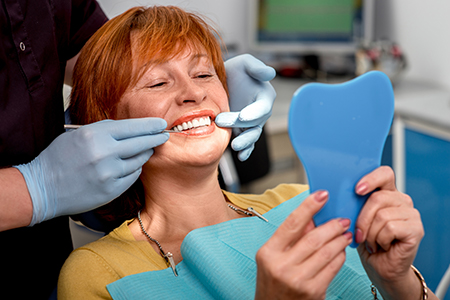
Crafting a successful denture begins with a careful diagnostic process. We review medical and dental history, examine the oral tissues, and use targeted imaging when needed to assess bone levels and anatomical landmarks that affect fit and function.
Accurate impressions, bite records, and a collaborative conversation about tooth shade and shape ensure the finished denture looks harmonious with a patient’s facial features. Laboratory communication and precise try-ins are central to achieving a comfortable occlusion and natural appearance.
When tooth extractions or preparatory procedures are necessary, we coordinate care so that healing and prosthetic timing align with the best predictable outcome. For patients pursuing implant-retained solutions, surgical planning and prosthetic design are integrated from the start.
Throughout the process, the focus is on durability, tissue health, and an appearance that supports confidence — not just an immediate cosmetic result. Long-term success depends on both skilled fabrication and a plan for ongoing maintenance.
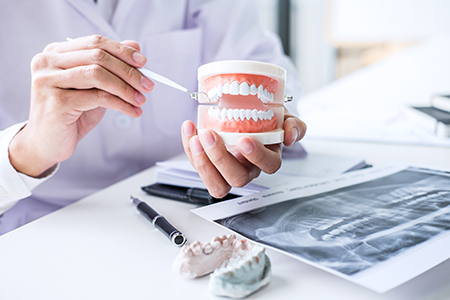
Adapting to a new denture is a gradual process. In the first days and weeks you may notice increased saliva, mild soreness in specific areas, and slight changes to speech. These responses are normal and generally subside as tissues and muscles adjust.
Speaking and eating with a new prosthesis improve with practice. Reading aloud, practicing pronunciation, and starting with softer foods help build confidence. Over time, most patients regain nearly normal function and enjoy the restored ability to eat a broader range of foods.
Cleaning and daily care are essential for longevity and oral health. Rinse dentures after meals, brush them gently with a denture brush, and soak them overnight if recommended. It’s also important to maintain hygiene of any remaining natural teeth and the gums beneath the denture.
Adjustment visits
Minor adjustments are common as your mouth settles. These visits let us relieve sore spots and refine the fit so the denture becomes more comfortable and secure.
Retention and stability
In some situations, adhesives or additional retentive options such as implant attachments can improve stability. We will discuss these possibilities based on your anatomy and daily needs.
Follow-up care and relines
As jawbone and soft tissues change over time, relines or restorative updates may be needed to maintain a snug fit and optimal function. Regular dental checkups help detect when these refinements are appropriate.

Removable dentures remain a practical, adaptable solution for restoring a healthy, complete smile. With modern materials and careful prosthetic design, a well-made denture can provide natural aesthetics, reliable function, and improved oral comfort.
If you have questions about whether a partial, complete, or implant-assisted denture is the right choice for your situation, our team will evaluate your needs and outline options tailored to your goals and oral health.
Contact Howard County Family Dentistry to learn more about denture choices and schedule a consultation. We’re happy to explain what to expect and to help you plan a treatment path that supports long-term oral health and confidence.

Today, it’s easier than ever to replace missing teeth and achieve natural-looking, durable, and long-lasting results! Depending on a patient’s dental needs, lifestyle, expectations of care, and budget, choices can include conventional fixed bridgework, dental implants, or removable partial and complete dentures. At the office of Howard County Family Dentistry, we’ll discuss all your options in care and answer all your questions as you choose the solution that’s right for you.
With advances in dental materials and technology, today’s dentures are more comfortable and realistic-looking than ever before.
Whether you wear partial or complete dentures, it’s essential to see the dentist for routine care. Besides checking the fit and condition of your dentures and making any necessary adjustments, you’ll also receive a comprehensive exam to check on the health of any remaining teeth as well as the soft and hard tissues in and around the oral cavity.
A same-day denture offers an accelerated design and fabrication process that allows a patient to go from impression taking to denture insertion in a single day.
For patients who don’t want to wait after having teeth extracted, an immediate denture can be inserted the same day your teeth are removed. Sometime later you may need the denture relined to address any changes in its fit once the extraction sites have completely healed.
While no one wants to drop or break a partial or complete denture, accidents do happen. The good news is that in some cases, your partial or complete denture is reparable. It all depends on the extent of the damage. Don’t hesitate to contact our office if you’ve broken or damaged your denture. We’re happy to help.
The simple act of taking your partial denture in and out can cause certain types of metal clasps to loosen over time. When you come in for your checkup visit or contact our office for an adjustment, we’ll assess the fit of your partial and tighten the clasps for improved stability and comfort.
While rebuilding a complete smile is a worthwhile investment, our office is sensitive to the costs involved in dental care. We customize care and will discuss which treatment options address your needs, lifestyle, and budget. How much a new denture will cost depends on the type of the prosthesis, its design, and the materials used to fabricate the supportive base, teeth, and clasps or precision attachments. Dentures that include the placement of dental implants for added retention and stability typically involve additional costs.
If you have dental insurance, your coverage may include a new or replacement set of dentures. Our staff is happy to review your coverage with you to ensure you are maximizing your insurance benefits while minimizing any out of pocket expenses.
At the office of Howard County Family Dentistry, we provide an extensive range of dental services, including the latest and most effective methods to help patients with missing teeth rebuild complete and beautiful smiles. As skilled and experienced professionals, we recognize that every patient is different, and every smile is unique. We’re passionate about what we do and take great pride in providing personalized treatment plans while treating our patients as valued partners in care.
Dentures are removable prosthetic devices that replace missing teeth and the soft tissues beneath them. They consist of lifelike artificial teeth set into a custom-shaped base that follows the contours of the mouth to restore chewing surface, facial support, and smile aesthetics. Because dentures are removable, they allow easy cleaning and give the underlying tissues a chance to rest overnight.
Modern denture materials and fabrication techniques improve fit, color matching, and natural tooth shape so prostheses look and function more like natural teeth than in the past. Properly designed dentures reestablish occlusal relationships and help patients chew a wider variety of foods, which supports nutrition and overall health. Over time, routine follow-up and adjustments help maintain comfort and function as oral tissues change.
Full (complete) dentures replace an entire upper or lower arch when no natural teeth remain, while partial dentures fill gaps when some healthy teeth are preserved. A full denture is supported by the gum tissues and underlying bone, whereas a partial usually uses clasps or precision attachments that engage remaining teeth for retention and stability. The choice between the two depends on how many teeth are present, the condition of the supporting structures, and long-term goals for oral health.
Partial dentures not only replace missing teeth but also help prevent adjacent teeth from drifting into empty spaces, preserving proper tooth relationships. Full dentures restore facial contours and lip support when multiple teeth are missing, reducing the sunken appearance that can accompany tooth loss. In both cases, material selection and careful design influence comfort, durability, and appearance.
An immediate denture is placed on the same day teeth are removed so the patient does not go without teeth during healing; these appliances commonly require relines or adjustments as tissues change shape. An overdenture gains extra support from preserved tooth roots or attachments, which can enhance stability and help maintain bone levels. Each of these approaches addresses different timing, stability, and anatomical concerns and can be selected based on the patient's situation and preferences.
Implant-supported dentures attach to strategically placed dental implants that act as anchors, offering markedly improved retention and chewing efficiency compared with tissue‑supported dentures. Implant attachments can be used for full-arch or partial solutions and are especially helpful for patients who seek greater stability or who have difficulty with traditional dentures. Treatment planning for implant-assisted options integrates surgical and prosthetic considerations from the outset to ensure predictable outcomes.
The process begins with a comprehensive consultation including medical and dental history, an oral exam, and targeted imaging if needed to evaluate bone and soft tissue anatomy. Accurate impressions and bite records are taken to capture the mouth's unique contours and jaw relationships, and the patient participates in tooth shade and shape selection to achieve a natural appearance. Laboratory communication and staged try-ins allow the dentist and patient to evaluate fit, occlusion, and esthetics before finalizing the prosthesis.
If extractions or preparatory procedures are required, the team coordinates timing to align healing and prosthetic stages for the best long-term fit. Once the denture is fabricated, initial delivery includes instructions for wear and care along with planned follow-up visits to refine comfort and function. These steps help produce a durable appliance that balances aesthetics, tissue health, and everyday usability.
Daily denture care begins with rinsing the prosthesis after meals to remove food particles and prevent stains, followed by gentle brushing with a denture brush and nonabrasive cleanser to remove plaque. Soaking dentures overnight in a recommended solution or water keeps them hydrated and helps reduce bacterial buildup, while cleaning the fitting surfaces supports a better seal and comfort. Avoid using regular toothpaste, stiff brushes, or hot water, which can damage denture materials.
Maintaining the health of any remaining natural teeth and the gums beneath the denture is equally important; brush and floss natural teeth and perform soft tissue cleansing daily. Regular dental checkups allow the team to evaluate tissue changes, assess fit, and perform professional maintenance such as relines or repairs. Proper hygiene and routine care help extend the life of the denture and support overall oral health.
Adaptation to a new denture typically involves increased saliva, mild soreness in pressure points, and temporary changes in speech, which generally improve as muscles and tissues adjust. Eating and talking may feel different at first; starting with softer foods, cutting items into small pieces, and practicing reading aloud or repeating difficult sounds can speed the acclimation process. Minor sore spots are common and are usually resolved with brief adjustment visits to refine the fit.
Follow-up appointments are important in the weeks after delivery to address pressure areas, optimize occlusion, and discuss retention strategies such as adhesives or attachments when appropriate. If symptoms persist or if the denture feels unstable, contacting the dental team sooner helps prevent complications and improves comfort. Long-term success often depends on timely adjustments and a plan for periodic maintenance as oral tissues change.
Implant-supported dentures are anchored to dental implants that are surgically placed in the jaw, providing fixed points of retention that significantly reduce movement during chewing and speaking. This enhanced stability improves biting efficiency and patient confidence, and it also helps preserve underlying bone by transmitting functional forces to the jaw. Because implants replace the root portion of missing teeth, they offer biological advantages that tissue-supported dentures cannot replicate.
Maintenance for implant-supported prostheses includes routine home care of the denture and implants as well as regular professional evaluations to monitor peri-implant tissue health. Attachments and implant components may require occasional servicing, and the overall treatment plan should factor in both surgical and prosthetic follow-up. With appropriate care, implant-assisted solutions can offer durable, high-functioning results for many patients.
A partial denture is often the best choice when several adjacent teeth are missing but other teeth are healthy and can provide support for a removable prosthesis. This option helps restore function quickly, prevents drifting of remaining teeth into open spaces, and can be a conservative solution that preserves natural tooth structure compared with more invasive restorations. The decision balances the health and prognosis of adjacent teeth, available bone, esthetic priorities, and the patient's daily needs.
Precision attachments and modern materials allow partial dentures to be both discreet and durable, and they can be designed to minimize stress on supporting teeth. When long-term goals include fixed restorations or implants, a partial denture can serve as an interim solution while planning and treatment progress. A careful evaluation helps determine whether a partial will best protect oral health and support future restorative options.
Dentures may require relining or adjustment whenever jawbone and soft tissues change shape, which can occur gradually over months and years after tooth loss. Relines improve the fit by reshaping the denture's tissue surface so it seats more securely against the gums, and minor repairs can address chips, broken teeth, or wear. Regular dental checkups allow the clinician to detect when maintenance is needed and to intervene before problems become uncomfortable or damaging.
Replacement is considered when a denture's fit, function, or esthetics can no longer be predictably restored through relines or repairs. Factors that influence timing include ongoing tissue changes, wear of denture teeth, and the patient's functional needs. Consistent follow-up care and professional evaluations help determine the appropriate schedule for maintenance or replacement based on individual circumstances.
Choosing the optimal tooth-replacement strategy begins with a comprehensive assessment of medical history, oral health, jawbone volume, and functional goals. The team evaluates remaining teeth and periodontal health, reviews imaging to assess bone levels and anatomic considerations, and discusses lifestyle factors that affect retention and maintenance. Patient preferences about timing, reversibility, and desired stability are central to arriving at a tailored recommendation.
At the office of Howard County Family Dentistry, clinicians collaborate with patients to outline the pros and cons of removable, implant-assisted, and hybrid approaches and to design a treatment plan that aligns with long-term oral health objectives. This shared decision-making process includes explanations of expected outcomes, required follow-up, and the steps involved in achieving a predictable result. The goal is a durable, comfortable solution that restores function and supports overall well-being.
Quick Links
Contact Us